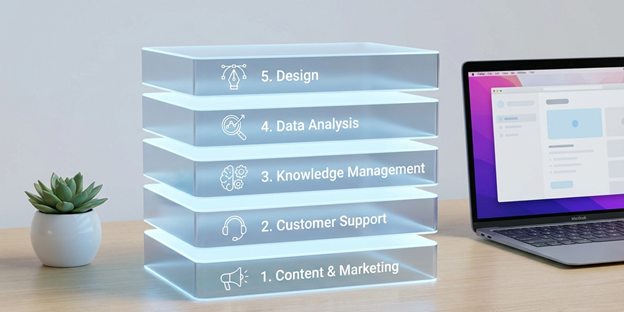


The AI-Powered Solopreneur dream – building a profitable, impactful business entirely on your own terms – has reached its definitive inflection point. The historical bottleneck, where one person could only manage so much, has been decisively eliminated. You no longer have to choose between scaling your time (impossible) and scaling your team (complex and costly).
We are in the established era of the AI-powered solopreneur. This is not about dabbling with a single chatbot; it is about strategically orchestrating a suite of artificial intelligence agents that function as your development team, marketing department, support staff, and strategic analyst. The outcome is clear: a single founder can now realistically architect, launch, and scale a Software-as-a-Service (SaaS) business to significant profitability without a traditional team or dilutive venture capital.
This guide is your operational blueprint. We will move past the foundational hype and detail the actionable systems that transform the AI-powered solopreneur from a powerful concept into your daily business reality.
Why Now is the Era of the Strategic Solo Founder
Previous technological waves automated tasks. The current AI revolution automates core competencies. An AI-powered solopreneur is not just saving minutes on emails; they are generating production-grade code from a conversation, creating segmented, high-converting marketing campaigns, and conducting deep analysis on user behavior, skills that once mandated specialized hires.
For the bootstrapped founder, this rewrites the startup’s financial blueprint. The largest traditional expense, skilled human labor is being redistributed into predictable, scalable software subscriptions. Your “team” is a curated stack of AI agents, and your primary role shifts from executing all tasks to designing and directing intelligent systems. This is the ultimate expression of a debt-free, asset-light philosophy: you invest in tools that multiply your output, not in fixed salaries that consume your runway.

The Foundational Mindset: From Creator to Systems Architect
To thrive as an AI-powered solopreneur, your first and most critical shift is psychological. You are no longer just a coder, a marketer, or a visionary. You are a systems architect.
- Your Goal: Design a self-reinforcing, automated business machine.
- Your Materials: Advanced AI tools, integrated APIs, and no-code/low-code platforms.
- Your Core Skill: Strategic integration, precise prompt engineering, and rigorous quality control.
This mindset is your shield against the two greatest pitfalls: becoming a passive consumer of AI novelties or drowning in the technical debt of disconnected tools. Your approach must be deliberate and systematic.
The Modern Operational Stack: Your AI “Team”
Let’s construct your company, department by department. Here is the essential, contemporary stack for the AI-powered solopreneur.
Department 1: Development & Product (Your AI CTO & Engineers)
The Challenge: Transforming your vision into a secure, functional, and scalable application.
- AI Development Co-Pilots (e.g., Advanced GitHub Copilot, Cline): Integrated directly into your development environment, these tools suggest complex code blocks, write comprehensive tests, debug existing code, and explain architectures. They can effectively double your development throughput.
- Context-Aware No-Code Builders (e.g., Bubble with AI, WeWeb): For building MVPs, customer portals, or internal tools, modern platforms use AI to generate entire application workflows, data models, and UI components from descriptive prompts.
- Strategy: Leverage AI co-pilots for core product innovation. Use intelligent no-code platforms for rapid validation, building internal tools, or creating customer-facing interfaces without deep custom code.
Department 2: Marketing & Growth (Your AI CMO & Content Team)
The Challenge: Attracting and converting a targeted audience with efficiency and precision.
- Strategic Content & Copy AI (e.g., ChatGPT-4, Claude 3, Jasper: Deploy these tools for sophisticated work:
- Generate data-driven content strategies and cluster topical maps.
- Create dozens of nuanced ad copy variants for hyper-targeted A/B testing across platforms.
- Draft personalized partnership outreach and PR pitches based on a recipient’s public work.
- Advanced Visual & Video AI (e.g., Midjourney v6, Runway Gen-3, HeyGen): Produce not just logos and banners, but consistent brand assets, product mockups, and realistic avatar-led explainer videos from text and audio inputs.
- Strategy: The AI is your scale and execution engine. You provide the unique strategic insight, proprietary data, and final creative direction. The AI handles the volume and variation.
Department 3: Sales & Support (Your AI Account Exec & Support Rep)
The Challenge: Providing instant, intelligent, and personalized interaction 24/7.
- Autonomous AI Chatbots & Help Desks (e.g., Intercom Fin, Zendesk Advanced AI): Deploy agents that do more than answer FAQs. They can qualify leads through multi-turn conversations, book meetings by accessing your calendar, and even handle tier-1 troubleshooting by accessing your documentation.
- AI-Powered CRM & Automation (e.g., Salesforce Einstein, AI-native HubSpot): These systems automatically score leads based on behavior, predict churn risk, and suggest next-best actions for customer engagement, ensuring you focus on the most promising opportunities.
- Strategy: Automate the entire initial customer journey, from first visit to qualified demo booking. This liberates you, the AI-powered solopreneur, to focus exclusively on high-value negotiation, complex solutioning, and relationship building.
Department 4: Operations & Strategy (Your AI COO & Data Analyst)
The Challenge: Making superior, rapid decisions based on synthesized data, not intuition.
- Integrated AI Knowledge Managers (e.g., Notion AI Q&A, Glean): These tools connect to all your company’s data sources; Google Drive, project management apps, communication platforms, and customer calls. Ask, “What features did our power users request most last quarter?” and get a synthesized summary with citations.
- Conversational Business Intelligence (e.g., Microsoft Fabric Copilot, Tableau Pulse): Connect to your financial, product, and marketing data. Ask in plain language, “What’s the correlation between our latest feature release and reduction in support tickets?” and receive an intelligent narrative with charts.
- Strategy: Create a centralized “company brain.” Use AI to continuously analyze your operational data, surfacing insights for strategic pivots, resource allocation, and opportunity identification.

The Execution Playbook: From Zero to System
With strategy defined, execution becomes a systematic process.
Phase 1: Strategic Foundation (Weeks 1-4)
- Define Your High-Value Niche: Use AI to analyze market gaps on platforms like LinkedIn, niche forums, and competitor review sites (e.g., G2, Capterra) to find underserved problems.
- Validate with an AI-Driven Pre-Launch: Build a waitlist landing page using AI copy and visuals. Use an AI chatbot to engage visitors, answer pre-sale questions, and gauge purchase intent.
- Build the Core Value Unit: Develop the one feature that delivers undeniable core value using your AI co-pilot. Ruthlessly prioritize.
Phase 2: Automated Launch & Learning (Weeks 5-10)
- Conduct a “Silent Launch”: Release to your waitlist with AI-handled onboarding. Monitor all AI interactions for friction points and unmet questions.
- Launch Your Content Flywheel: Use your marketing AI to produce a series of foundational “pillar” articles and social content that targets your core customer anxieties and search intent.
- Implement Feedback Loops: Use AI to categorize and summarize all user feedback from support chats, emails, and in-app surveys.
Phase 3: Systematization & Scale (Weeks 11-Onward)
- Identify Your Key Lever: Use your BI tools to pinpoint the one metric that most directly drives growth (e.g., activation rate, expansion revenue).
- Optimize Relentlessly: Direct all you and your AI systems’ focus to improving that single metric.
- Automate a Core Business Function: Fully systematize one major process, be it lead-to-close, customer onboarding, or financial reporting, until it requires minimal manual oversight.

The Critical Caveat: The Irreplaceable Human Architect
The most successful AI-powered solopreneur understands a fundamental truth: AI is a force multiplier for human judgment, creativity, and ethics, not a replacement.
- Strategic Vision: AI executes tactics. You must define the overarching strategy, the “why” behind the business.
- Ethical Guardrails & Authenticity: You must audit AI outputs for bias, ensure data privacy, and inject your unique voice and story into all customer-facing content. AI-generated text should be your first draft, not your final copy.
- Quality Control & Nuance: Review critical code, complex customer responses, and strategic documents. AI handles the bulk, but your expertise ensures excellence and navigates nuance.
Conclusion: Your Defining Advantage
The barrier to building a profitable, sustainable business has been permanently lowered. The AI-powered solopreneur now commands a definitive advantage: the agility and clarity of a single decision-maker, amplified by the executional capacity of a sophisticated, automated system.
This path demands modern craftsmanship, the skill of architecting and orchestrating intelligence. It requires the bootstrapper’s ethos of extreme resourcefulness, applied to the most powerful resource in the economy.
The tools are mature and integrated. The strategy is proven. The era of the AI-powered solopreneur is the present. Begin by designing your stack, not your org chart. Your focus must be on directing your AI agents with precision. Your profitability is now a direct function of the clarity of your vision and the resilience of the automated systems you build to enact it.