
Complete Financial Model for Startups – Free Interactive Template
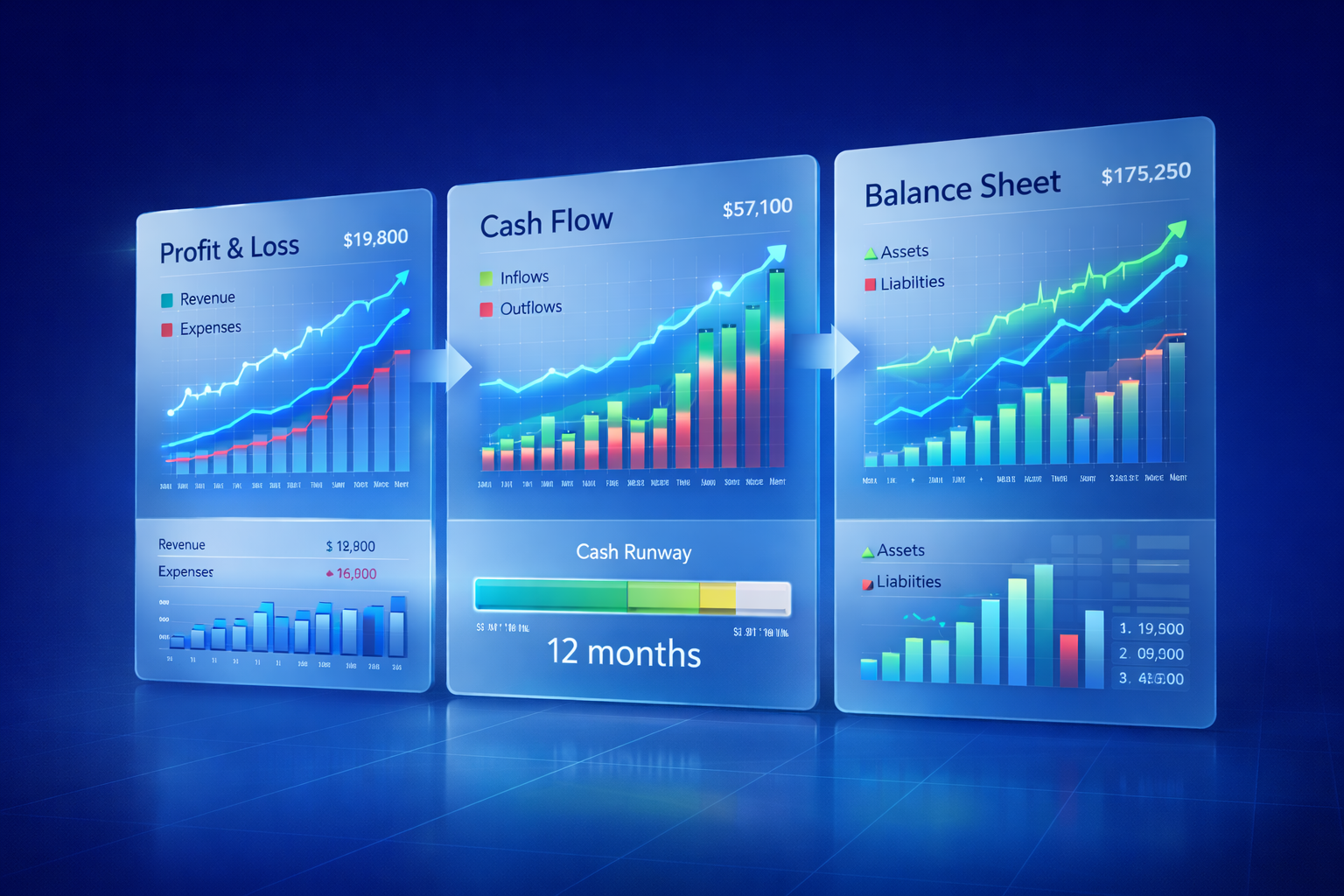
startup financial model Template - Interactive 3-Statement Dashboard showing P&L, Cash Flow, and Balance Sheet projections with runway visualization
⚡ FREE • 500+ Startups Analyzed
✨ FREE INVESTOR-GRADE FINANCIAL MODEL

Startup Financial Model Interactive Calculator for Startups

⚡ Free startup financial model template — build investor-grade projections in 30 minutes

This startup financial model template helps you project your P&L, Cash Flow, and Balance Sheet in 30 minutes. See exactly when you’ll run out of cash—or turn profitable with this complete startup financial model template.

3-Statement Integration • P&L, Cash Flow, Balance Sheet
Automated Runway • Know your cash position every month
Investor Metrics • Burn multiple, revenue multiple, breakeven

“This model helped us extend our runway by 8 months by identifying unnecessary expenses. The investor-grade projections made our seed round close in 3 weeks.”

MS
MarxisSolution Based on 500+ IT startup analyses
🚀 Start Building Your Free Financial Model Now

Interactive startup financial model Template

⚠️ Educational purpose only: This tool helps you understand financial forecasting. Always consult with a qualified financial professional for specific advice.

💰 Starting Position

Your current bank balance
Last month’s revenue
All operating expenses

📈 Growth Assumptions

10% = double in 7 months
Keep this lower than revenue
For SaaS: 15-25% typical

⏱️ Working Capital

Days to collect payment
Days to pay bills

📅 Forecast Period

12-18 months recommended

📊 Profit & Loss Summary (12 Months)

Total Revenue $0
Total COGS $0
Gross Profit $0
Operating Expenses $0
Net Income (Loss) $0
Gross Margin 0%

💰 Cash Flow & Runway

Operating Cash Flow $0
Ending Cash Balance $0
Cash Runway 0 months
Burn Multiple 0.0x
Breakeven Month N/A

📋 Balance Sheet Highlights

Accounts Receivable $0
Accounts Payable $0
Working Capital $0

🎯 Key Metrics

Operating Margin 0%
Revenue Multiple 0.0x
Monthly Burn (Avg) $0

📉 Cash Runway Visualization

$0 $250,000

Green line = Breakeven point (if achieved)

Free Resource

Startup Financial Model Guide

A complete guide for bootstrapped startup founders

Basics

What Is a startup financial model?

A financial model is a spreadsheet that forecasts your startup’s future financial performance. It helps you understand how business decisions impact cash flow, runway, and profitability. For bootstrapped founders, a good financial model is essential for making informed decisions without relying on investors.

Why It Matters

Why Every Bootstrapped Founder Needs a Financial Model

⏱️

Extend Runway

Identify where you’re overspending before it’s too late.

🎯

Test Scenarios

See how hiring, pricing, or marketing affects your cash.

📊

Set Realistic Goals

Know exactly what revenue you need to reach profitability.

💰

Fundraising Ready

Professional projections when you seek investment.

Components

Key Components of a Startup Financial Model

📈

Revenue Model

Project your revenue based on your pricing strategy. For SaaS, this includes:

  • Number of customers (new, existing, churned)
  • Average Revenue Per Account (ARPA)
  • Monthly Recurring Revenue (MRR) growth
  • Annual Recurring Revenue (ARR)
  • Expansion revenue (upsells, cross-sells)
💰

Cost Structure

Break down your expenses into fixed and variable costs:

  • Fixed costs: Salaries, software, rent
  • Variable costs: Marketing, payment fees, contractors
  • One-time costs: Legal fees, equipment, development
💵

Cash Flow Statement

Track money in and out of your business. This shows your runway:

  • Beginning cash balance
  • Cash inflows (revenue, investments)
  • Cash outflows (expenses, purchases)
  • Ending cash balance
  • Runway calculation
Metrics

Key Metrics Dashboard for SaaS

Recurring Revenue
MRR/ARR
Customer Loss
Churn Rate
Acquisition Cost
CAC
Customer Value
LTV
Health Ratio
LTV:CAC
Cash Burn
Burn Rate

Target: LTV:CAC ≥ 3:1 for sustainable growth

Step-by-Step

How to Build Your First Financial Model

1
Start with revenue projections

Be conservative. Assume slower growth than you hope for.

2
List all expenses

Don’t forget small items like software subscriptions and bank fees.

3
Build a cash flow statement

This shows your actual runway month by month.

4
Create scenarios

Build base, best, and worst case scenarios.

5
Update monthly

Compare actuals to projections. Adjust as you learn.

6
Use our template

Download below to get started with pre-built formulas.

⚠️ Avoid These

Common Financial Model Mistakes

📈 Over-optimistic revenue

Most startups take 2-3x longer to reach revenue targets than planned.

💸 Underestimating expenses

Add a 10-20% buffer for unexpected costs.

📅 Ignoring seasonality

Revenue may dip in summer or December.

⏰ Forgetting payment terms

Revenue ≠ cash. Annual billing means cash upfront but revenue recognized monthly.

Template Features

How This Template Helps You Extend Runway

📊
Pre-built formulas

MRR, ARR, churn, and CAC calculations ready to use.

🔄
Automatic runway calculation

Based on your cash balance and burn rate.

🎲
Scenario planning

Test different pricing, hiring, and growth assumptions.

📈
Visual dashboards

Track key metrics at a glance.

📥 Download Free startup financial model Template

Get the complete startup financial model template with 12-month detailed projections, charts, and scenario planning.

Includes: P&L, Cash Flow, Balance Sheet, Charts, and 3 scenarios

How to Use This Startup Financial Model Template in 30 Minutes

1

Enter Your Starting Position

Start using this startup financial model template by pulling your actual bank balance, last month’s revenue, and total expenses from your bank statements. Be accurate—garbage in = garbage out.

2

Set Realistic Growth Rates

For bootstrapped SaaS, 10% monthly growth is strong. 5% is solid. Be conservative—it’s better to be surprised than to run out of cash.

3

Review Your Runway

Look at the ending cash balance. If it’s negative, you have a problem to solve now. Options: cut costs, increase prices, or start fundraising.

4

Download & Update Monthly

Get the Excel version. Every month, replace forecasted numbers with actuals and adjust forward assumptions. This 30-minute habit prevents cash crises. For advanced techniques, see Wall Street Prep’s modeling guide.

5

Calculate Your Break-Even Point

Now that you know your runway and burn rate, find out how many customers you need at your current pricing. Use our SaaS Break-Even Calculator to set your customer acquisition targets and plan for profitability.

Startup Financial Model Template: Frequently Asked Questions

How far ahead should I forecast? +

12-18 months is ideal for bootstrapped startups. Less than 12 months doesn’t give enough warning for fundraising. More than 18 months is pure fantasy—too many unknowns.

What’s a realistic monthly growth rate? +

For bootstrapped SaaS: 10-20% is exceptional, 5-10% is strong, under 5% is typical for mature products. Be honest with yourself—overly optimistic forecasts hide real problems.

Do I really need a balance sheet? +

Yes if you have accounts receivable (customers who pay later) or accounts payable (bills you haven’t paid). Investors will ask for it. But start with P&L and cash flow if you’re overwhelmed.

How often should I update my forecast? +

Monthly, right after you close your books. Compare actuals to forecast, understand why you were wrong, and adjust forward projections. This 30-minute habit is non-negotiable.

What if my runway is less than 6 months? +

You have three options: 1) Cut expenses aggressively, 2) Increase revenue (raise prices, sell more), or 3) Start fundraising immediately. Don’t wait—runway disappears faster than you think.

How many customers do I need to break even? +

Your financial model shows your monthly burn rate and revenue. To find exactly how many customers you need at your current pricing, use our SaaS Break-Even Calculator. It takes your fixed costs, ARPU, and variable costs to give you the precise customer count needed for profitability.

Continue Your Financial Toolkit with More Templates

Explore a complete startup financial model template collection and related tools.

🎯 New: SaaS Break-Even Calculator – See exactly how many customers you need

Scroll to Top